ServicesRoof Treatments
Roof Treatments in Amsterdam, NY
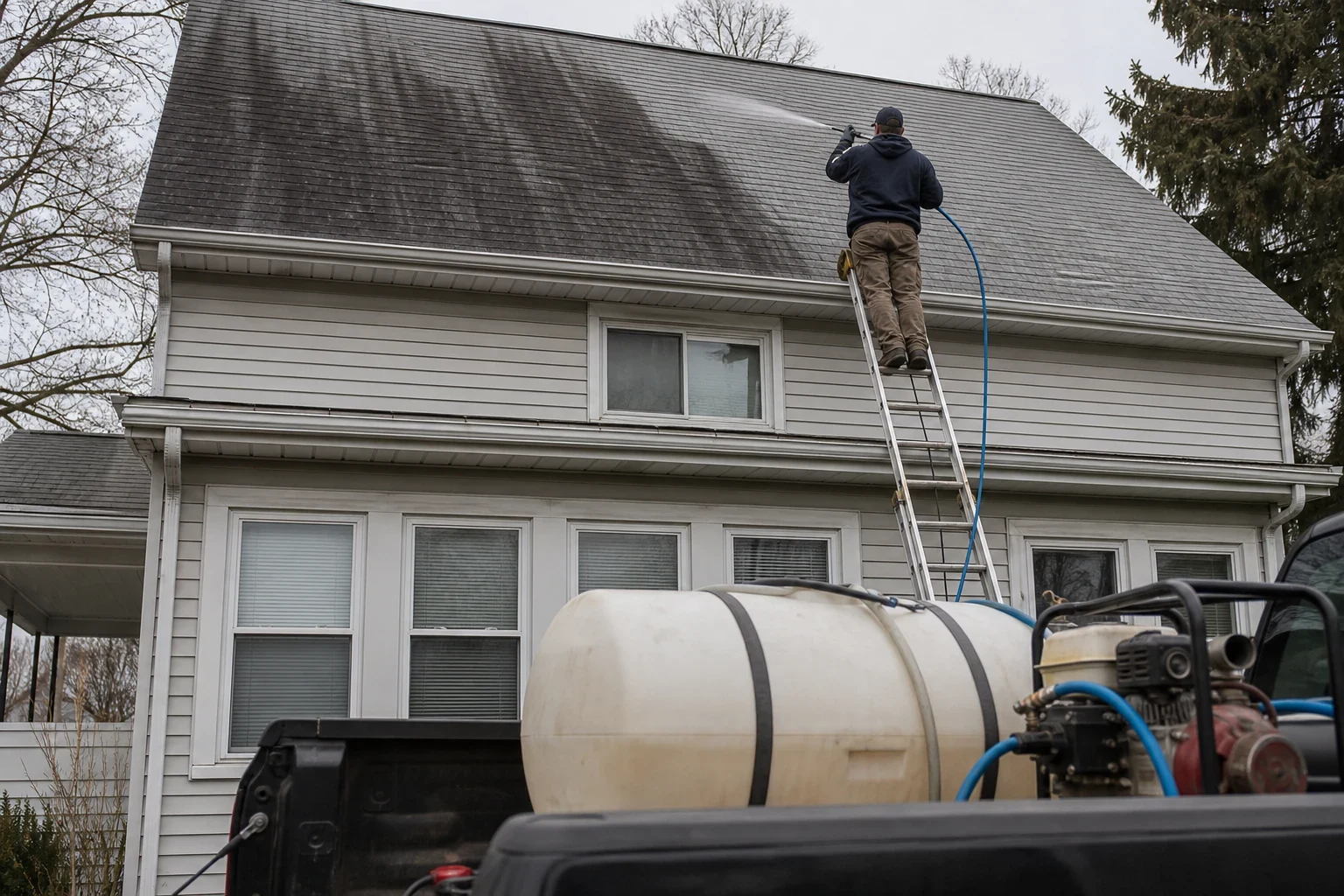
Black streaks, green moss and crusty lichen do more than look tired. We treat the roof with a gentle, low-pressure application that kills the growth at the root, never blasting your shingles, so you can deal with it on your schedule before it shortens the life of the roof.
What a roof treatment does for your shingles
Most dark streaks on asphalt shingles are algae, not dirt. It feeds on the limestone filler in the shingle and spreads downhill with every rain. Moss and lichen come next, usually on the shaded slope, and they hold water against the roof like a wet sponge.
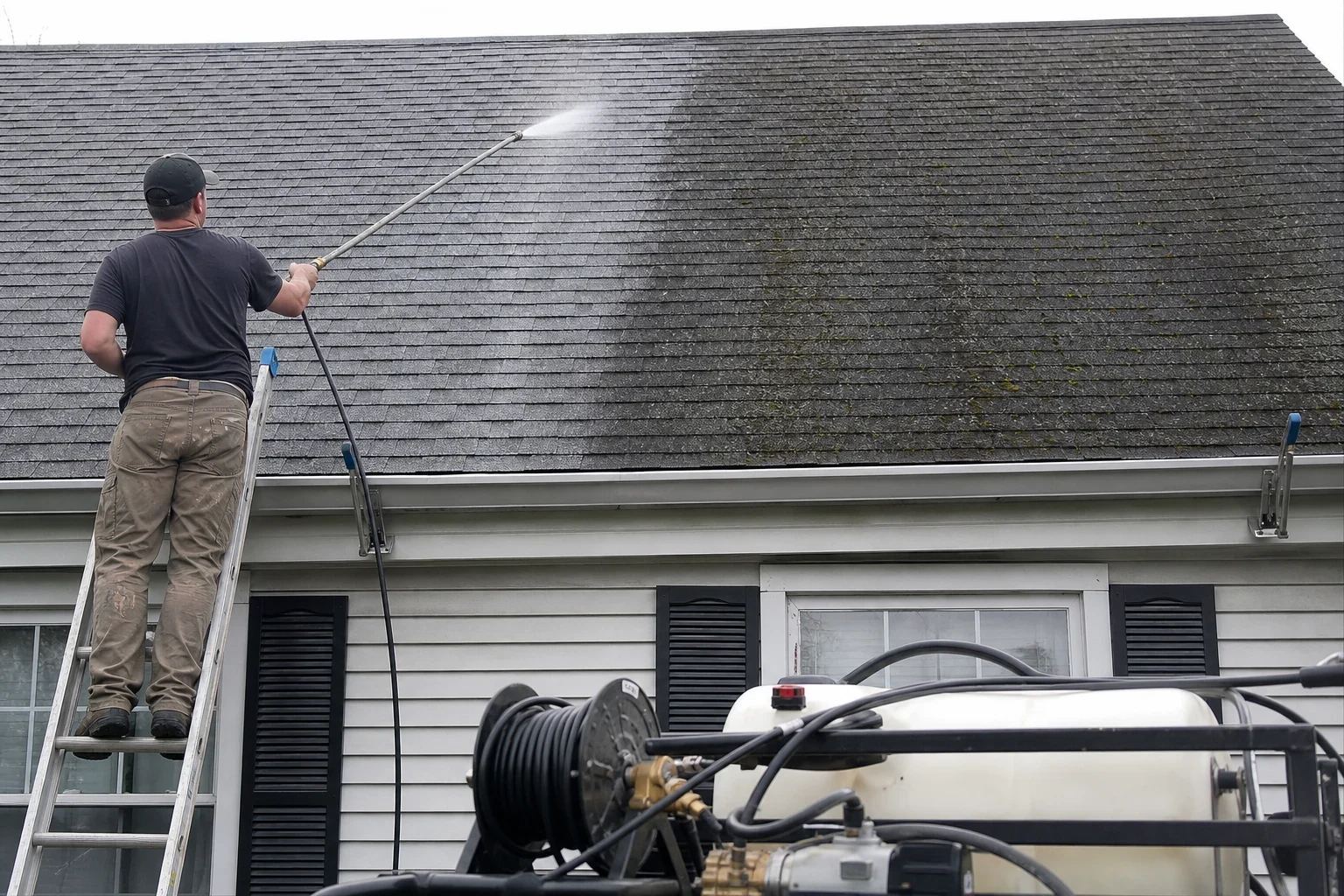
Our roof treatments apply a treatment solution at low pressure, let it work, and rinse gently. Nothing high-pressure touches the shingles, because that kind of force strips the protective granules you are paying to keep. The growth dies on contact, and what remains loosens and washes off over the following weeks of rain.
The best time to call is when you first notice streaking or a few green patches. A treatment then is a small, planned expense. Waiting until moss has lifted shingle edges turns it into a repair conversation.
What's included in every roof treatment
A look at the roof first
We check the shingles, flashing and shaded areas before quoting. If we spot something a treatment won't fix, like cracked or missing shingles, we tell you plainly and show you a photo.
Plant and property protection
We pre-wet shrubs and garden beds and cover sensitive plants near the drip line. Windows, doors and outdoor furniture are protected or moved out of the runoff path.
Low-pressure application
The solution goes on at about the pressure of a garden hose. It reaches the algae and moss roots without lifting granules or forcing water under the shingle tabs.
Moss removal where it's thick
Heavy mats get loosened by hand with soft tools before treatment so the solution can reach the roof surface. We work downhill to avoid prying shingles up.
Rinse and cleanup
We rinse plants and hard surfaces again when we finish, check the gutters and downspouts for loosened debris, and pick up anything that came off the roof.
Signs your roof is ready for a treatment
- Black or gray streaks
- Vertical streaks running down from the ridge are a classic algae pattern. They usually start on the side that gets the least sun.
- Green, fuzzy patches
- Moss starts in the seams between shingles and spreads outward. Once it gets thick, it holds moisture and can push shingle edges up.
- Flat, crusty spots
- Lichen looks like pale green or gray coins stuck to the roof. It grips tightly, and pulling it off by hand often takes granules with it.
- Granules collecting below
- A layer of grit in the gutters or at the bottom of downspouts can mean growth is wearing the shingle surface. It's worth a look before it goes further.
- Shade from nearby trees
- Overhanging branches keep slopes damp after rain and snowmelt. Roofs under trees tend to need treatment sooner and more often.
How the day goes
- 1
Free quote by phone and on-site look
You call, we ask a few questions about the roof and set a time to see it. We walk the property, note the pitch, height and amount of growth, and give you a clear written price.
- 2
Pick a date that works
Treatments go best on a mild, dry day above freezing, from late spring into fall. Plenty of our customers book a season ahead so the work fits their budget and calendar.
- 3
Prep and protect
On the day, we set up ladders, wet down the landscaping and cover what needs covering. You don't need to be home, as long as we can reach an outdoor spigot.
- 4
Treat, rinse and clean up
We apply the solution, give it time to work, then rinse the roof and the ground below. Most homes are done in a few hours.
- 5
Watch it fade
Streaks lighten right away, and dead moss and lichen keep washing off with rain over the next several weeks. Give us a call if you have questions as it clears.
What affects the price of a roof treatment
Every roof is quoted after we've seen it, and the price we give you is the price for the work described. Knowing what moves the number helps you plan for it ahead of time.
- Roof size and pitch
- More square footage means more solution and more time. Steep roofs need extra safety setup and slower, more careful work.
- Height and access
- A two-story roof or one surrounded by tight landscaping takes more ladder work than a single-story ranch with open ground around it.
- How much growth there is
- Light algae streaks treat quickly. Thick moss that has to be loosened by hand first adds labor.
- Roofing material
- Asphalt shingles are the most common, but metal, cedar and slate each call for a different approach and a different solution strength.
Roof treatment questions
- Will a roof treatment damage my shingles?
- No, as long as it's done at low pressure, which is the only way we do it. High-pressure spraying is what damages shingles, because it strips granules and can drive water under the tabs. Our method lets the solution do the work instead of force.
- How long do the results last?
- It depends mostly on shade and moisture. A roof in full sun may stay clear for a few years, while a roof under heavy tree cover will see growth return sooner. We'll tell you what to expect for your roof and roughly when a follow-up makes sense, so you can plan for it.
- Is it safe for my plants and pets?
- We pre-wet and rinse landscaping before and after, and cover sensitive plants near the roof edge. Keep pets indoors during the work and until the ground has been rinsed and dried a bit.
- Why doesn't the roof look perfect the same day?
- Algae streaks lighten quickly, but moss and lichen die first and let go over time. Rain does the final rinse over the next several weeks, which is gentler on the roof than scraping everything off at once.
- Can I wait until next year?
- Light streaking can wait without much harm. Moss is different, since it keeps the roof wet and can lift shingle edges through a winter of freeze and thaw. If you're seeing green, it's worth getting a quote now and scheduling it before the cold sets in.
Plan your roof treatment before winter
Tell us what you're seeing on your roof and we'll come take a look. You'll get a clear written price and a date that fits your schedule.